Prominent Entries That Control Property Access
Estate gates serve as the primary entry feature for properties where the entrance itself communicates the character of what lies beyond. These installations combine physical access control with visual impact, marking the transition from public road to private property in a way that reflects the scale and design intent of the home or land. Properties with long driveways, wooded approaches, or substantial acreage benefit from estate gates that define the entrance point clearly and provide a controlled access mechanism suited to the setting.
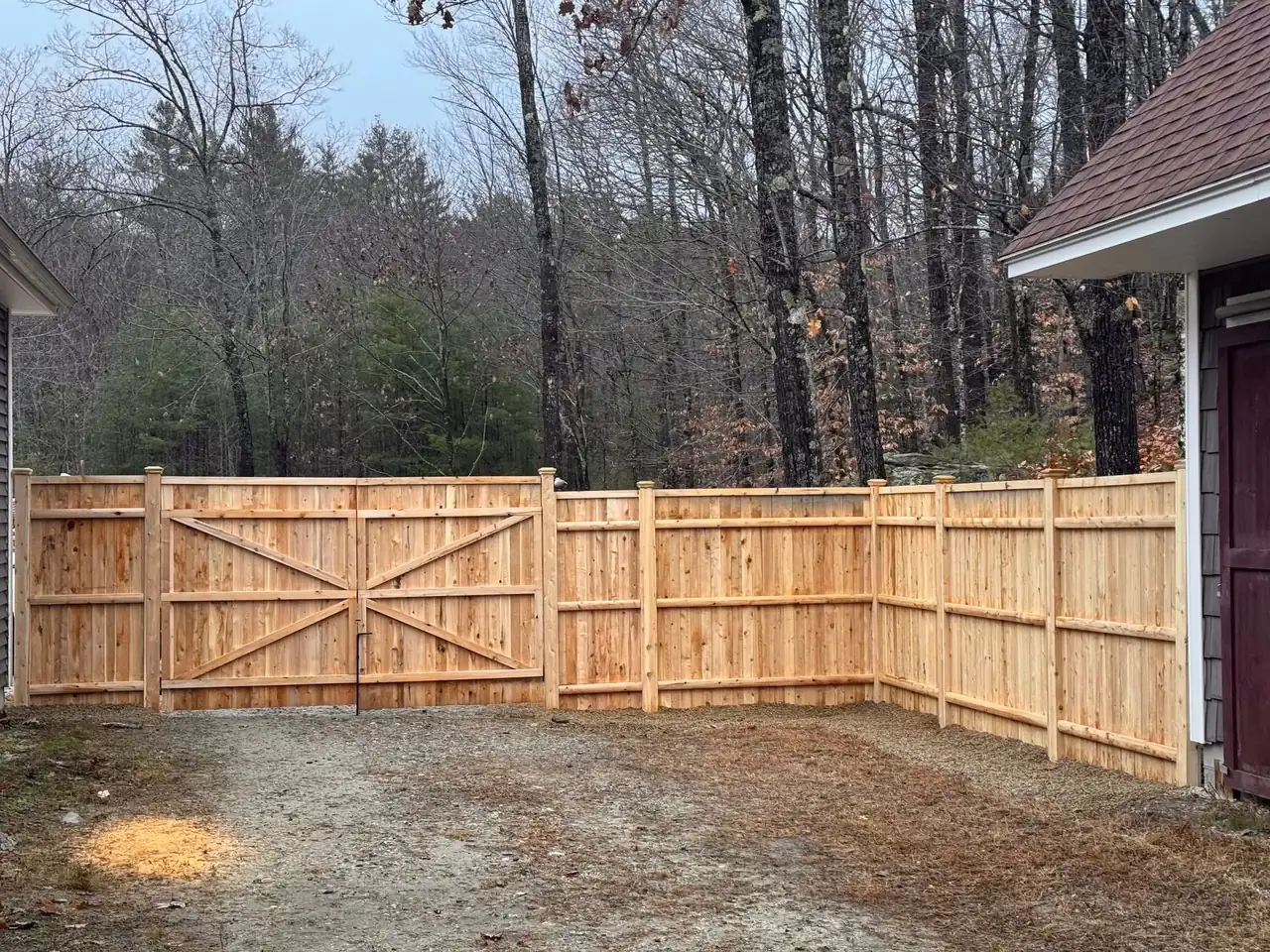
J&M Exteriors installs estate gates for residential properties in Warren and surrounding areas where driveway configuration, fence integration, and the overall property layout require careful planning to ensure the gate functions properly and aligns with the home's architectural context. Gate dimensions are determined by driveway width, vehicle types that need access, and whether the gate will swing inward, outward, or slide parallel to the fence line.
Schedule a property visit to evaluate entrance layout, gate sizing, and integration with existing or planned fencing for your estate gate project.
What Proper Estate Gate Installation Requires
The installation process begins with assessing the driveway approach, including grade changes, turning radius for vehicles, and how the gate opening relates to the fence line running along the property edge. Posts are set with footings sized to handle the gate's weight and wind load, and hinge or track systems are selected based on whether the gate swings or slides. Automated operation is often incorporated, requiring electrical service, operator mounting, and control integration as part of the overall project.
J&M Exteriors coordinates gate proportions with the surrounding fence height and style so the entrance reads as a cohesive design element rather than an afterthought. Once installed, the gate provides controlled entry that prevents unauthorized vehicle access, defines the boundary between road and property, and remains functional through seasonal weather including snow load, ice accumulation, and temperature extremes common in Maine.
Additional planning factors include whether the gate should be visible from the road or set back behind landscaping, how lighting affects nighttime operation and visibility, and whether pedestrian access requires a separate walk-through gate adjacent to the main vehicle entrance. Gate latch and locking mechanisms are selected based on security requirements and whether remote or manual operation is preferred.